There’s that obligatory angle in any live newscast from the aftermath of a mass murder; the neighbor, the classmate, the co-worker, dug up for that moment when they declare some characterization of the perpetrator. Not a single one of them ever said, “Yeah, he was my friend,” or “I used to mentor him.”
I don’t believe it has anything to do with no one wanting to be known to associate with a spree killer. Media would be all over someone who said, “I knew him really well and this totally shocked me.”
No. The reason why producers and reporters fail to find people in functional relationships with killers to speak on their behalf is because there aren’t any.
And that’s the problem.
Sociopaths are called such due to their non-social behavior, though they tend to seek out others with “group values” towards breaking social contextual rules. There is a disconnect between conscience and action, making close relationships difficult if not impossible to sustain.
Not as easy to detect are psychopaths, those incapable of empathy, but have the appearance of charm. Robert D. Hare, in his recent research and clinical practice, devised a way to diagnose psychopathy. It's a list of personality tags that may be observed.
These behaviors include manipulative charm, narcissism, amorality, parasitic living, no remorse, feigning emotion, incapacity to empathize, promiscuity, entitlement, no goal orientation, irresponsibility, pathological lying, impulsivity and the inability to sustain relationships. However, other characteristics make this individual difficult to detect.
This personality can be immediately endearing and credible, charismatic to the point of interpersonal conversion. We like this person. They appear funny, brilliant, deep, or insightful not because they are inherently, but because they know how to use their well rehearsed arsenal of lies and have no remorse in doing so.
So, on one hand is the sociopath, associated only to those of their kind, isolated to the rest, and on the other, the psychopath, morally disconnected but adept at feigning relationships. Don’t confuse this with some kind of continuum. There are a couple of more diagnoses involved. The point is, spree killers, no matter their mental illness, have no or few meaningful relationships.
For me, that begs the question; were these individuals engaged by a friend, a mentor, an enduring relationship wherein human value was sustained, would their homicidal terminus have been thwarted?
Ryan Heber, the science teacher who talked a sixteen year-old gunman into surrendering his weapon, has resisted the public spotlight, but you can bet the media have found plenty of friends to attest to his good character.
Micro Expressions
This discovery of non-verbal human tells is from Dr. Paul Eckman. It was upon his research the show Lie to Me was based.
The concept is that while we may be feeling a base emotion, we may be simultaneously masking that emoiton. Think of the powerful influence of manners, or just being nice. Eckman asserts, though, that true emotions can punch through the patina of being nice, or stoic, or feigning interest. These flashes of truth are called micro expressions because they often happen in one thirtieth of a second.
Unlike language used to express emotions, micro expressions are universal regardless the culture. In fact, Eckman's research discovered that primates and other mammals have universal signals for emotion. For humans these emotions are identified as happiness, sadness, fear, anger, surprise disgust and contempt.
Take a look at these expressions from some of my interns:


See if you can identify them.
Chances are you went...
Happy
Sad
Surprise
Disgust
Anger
Contempt
...and you did so based on your inherent ability to identify these emotions. Most of us can. It's when these fly by you at less than half a second when this gets difficult to identify.
What can help is establishing a baseline, or a neutral, like these:


While it's tough to be completely void of emotion, like some of these students, the neutral expression is a reference for the observer to use in identifying other micro expression.
In threat assessment, of all these micro expressions, the one to be most concerned with is not anger,
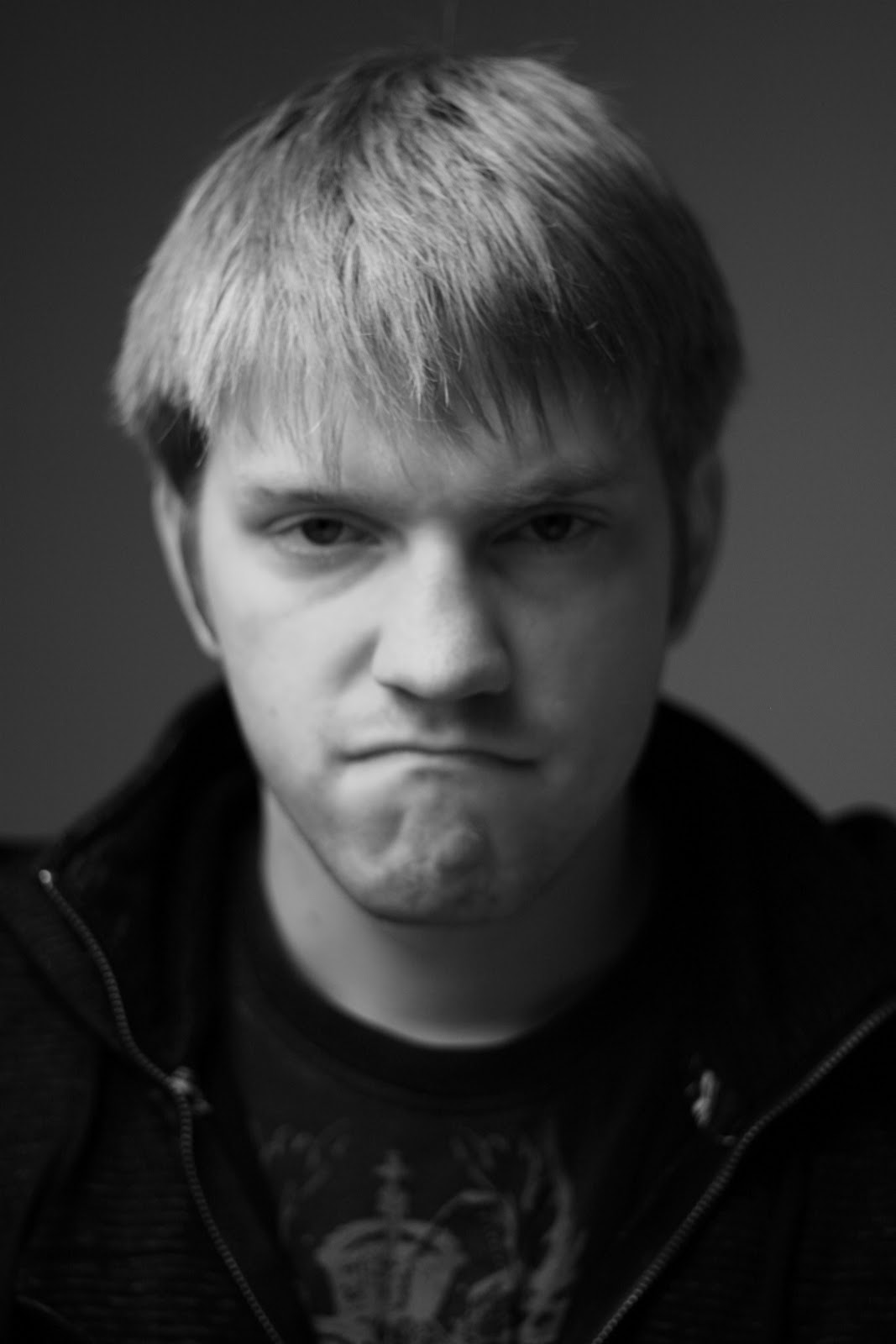
...it's not disgust,

...it's this one, contempt.
Of all the micro expressions this is the only asymmetrical display. It's defining characteristic - the curled lip raised to one side, the eyes vacant in expression.
Contempt is an evacuation of conscience. When one is evaluated in contempt, their value ceases. When one is contemptuous they're above the obligation of morality, superior to their subject, perpetuated by thoughts that do not consider their subject's value. Contempt can breed vengeance, an escalated emotion common to threatening behavior.
Subscribe to:
Posts (Atom)